
Open topic · lesson 3 of 3 · 12 min
AI and copyright
Who owns what AI produces, and was it legal to train AI on other people’s work? Learn where U.S. law is settled, where it is still being fought over, and what that means for what you make.
- Explain why purely AI-generated work is not protected by U.S. copyright
- Describe the unresolved dispute over training data
- Reduce your own risk when you create with AI
What you make with AI: human authorship is required
In the United States, copyright protects only work created by a human. A federal appeals court confirmed this in 2025 in a case about an image made entirely by an AI system, and in March 2026 the Supreme Court declined to hear the appeal. The Copyright Office has said that typing a prompt is not enough to make someone the author of the output, because prompts are instructions and the system determines how they are carried out. Work can still be protected where a person contributes real creative expression: writing, selecting, arranging, or substantially editing.
A doctrine in U.S. copyright law that permits limited use of protected work without permission in some circumstances. Courts decide it case by case, weighing the purpose of the use, the nature of the work, how much was used, and the effect on the market for the original.
When you register a work with the U.S. Copyright Office, you are expected to disclose content generated by AI and to claim only the human-authored parts. A children’s book with a human-written story and AI-generated pictures can be registered for the text and the arrangement, but not for the pictures themselves.
What AI was trained on: still being decided
The harder question is whether AI companies needed permission to train on books, articles, images, and music. Courts have not settled it. In 2025 one federal judge found that training on lawfully acquired books could qualify as fair use, while holding that keeping a library of pirated copies was not, and that case ended in a 1.5 billion dollar settlement with authors. Other cases, including the New York Times lawsuit against OpenAI and Microsoft, were still pending in early 2026. Meanwhile, some publishers have signed licensing agreements with AI companies instead.
What this means for you
Three practical points follow. First, if you need to own what you make, such as a logo, a book, or software, make sure a person does the creative work and keep a record of it. Second, AI output can resemble existing protected work, and the person who publishes it carries the risk, so check anything distinctive before you use it commercially. Third, read the terms of the tool you use: some providers promise to defend business customers against copyright claims and some do not. This lesson is general information, not legal advice.
Check one thing you made with AI
Take something you created with AI help, or plan to, and work out what you own and what you might be exposed to.
If the work matters commercially, this exercise tells you what to ask a lawyer. It does not replace one.
0 of 5 practice steps checked. Saved on this device.
A small bakery generated a logo with an image tool and wanted to trademark and print it. Contribution: a one-line prompt. Result: probably not protectable by copyright, so a competitor could copy it. The image also resembled a well-known cartoon character. Decision: hire a designer to draw an original mark, using the AI versions only as a reference for the mood they wanted.
Check your understanding
Answer both to mark the lesson complete. You can try again. This is practice, not a graded exam.
1. Under current U.S. law, can an image produced entirely by an AI system from a text prompt be copyrighted?
2. Which statement best describes the law on training AI with copyrighted material, as of 2026?
Three things to remember
- U.S. copyright protects human authorship. A prompt alone is not enough.
- Whether training on protected work is fair use is still being decided in court.
- If ownership matters, keep a person doing the creative work, check the output, and read the tool’s terms.
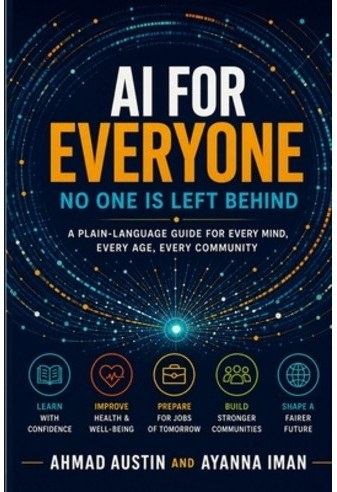
A plain-language guide to AI for every mind, every age, and every community.
- U.S. Copyright Office, Copyright and Artificial Intelligence, Part 2: Copyrightability (Jan 2025)
- U.S. Copyright Office, Copyright and Artificial Intelligence
- Mayer Brown, Supreme Court denies review in AI authorship case (March 2026)
- Copyright Alliance, AI copyright lawsuit developments in 2025: a year in review
- AI Business, AI lawsuits in 2026: settlements, licensing deals, litigation (Feb 2026)
Examples are composites written for teaching unless a source is cited. Figures come from the sources listed where given.