
Open topic · lesson 1 of 3 · 12 min
AI and your job
Predictions about AI and jobs range from nothing changes to everything does. Learn what the evidence so far actually shows, and how to read your own job against it.

- Distinguish exposure from replacement
- Describe who has gained and who has been hurt so far
- Assess the tasks in your own job
AI changes tasks before it changes jobs
A job is a bundle of tasks, and AI affects some tasks far more than others. The International Labour Organization estimates that about one in four workers worldwide is in an occupation with some exposure to generative AI, rising to about one in three in high-income countries, with clerical work the most exposed. The same study concludes that transformation of jobs, not elimination, is the most likely result. Exposure means AI can do or speed up part of the work. It does not mean the job disappears.
The share of the tasks in an occupation that AI could perform or speed up. High exposure means the job is likely to change. It does not, by itself, mean the job will be eliminated.
A customer support team in the 2023 study gave agents an AI assistant that suggested replies. New agents reached the performance of experienced ones in a fraction of the usual time, because the tool passed along what the best agents already did. The most experienced agents gained little. The same technology helped one group a great deal and another hardly at all.
What the evidence shows so far
The World Economic Forum’s 2025 survey of employers projects 170 million new jobs and 92 million displaced by 2030, and expects 39 percent of key job skills to change. Studies of real workplaces show a split. In one large study of customer support agents, an AI assistant raised productivity about 14 percent on average and by about a third for the newest workers. But a 2025 Stanford analysis of U.S. payroll records found a 13 percent relative decline in employment for workers aged 22 to 25 in the most AI-exposed occupations, while experienced workers in the same jobs held steady.
Where the risk and the opportunity sit
Taken together, the findings point the same way. AI helps people who already know how to judge the result, and it is hardest on entry-level work that consists of tasks AI can do alone. The Stanford study found the declines concentrated where AI automates work rather than assists it. For individuals, that makes judgment, domain knowledge, and the ability to check AI output more valuable. For employers and schools, it raises a harder question: if AI does the beginner tasks, how do beginners become experts?
Map your own job
List the main tasks in your job, or a job you know well, and sort them by how AI is likely to affect each one.
Be specific. “Writing reports” is several tasks: gathering facts, deciding what matters, drafting, and checking.
0 of 5 practice steps checked. Saved on this device.
A school office administrator. AI could do: drafting routine parent emails, summarizing meeting notes. AI could speed up: scheduling, formatting reports. AI cannot help: calming an upset parent, deciding when to escalate a concern, knowing which teacher to ask. Skill to strengthen: reviewing and correcting AI drafts quickly, because someone accountable still has to sign them.
Check your understanding
Answer both to mark the lesson complete. You can try again. This is practice, not a graded exam.
1. The ILO says about one in four workers is in an occupation exposed to generative AI. What does exposed mean here?
2. According to the 2025 Stanford payroll study, which group has seen the clearest employment decline in AI-exposed occupations?
Three things to remember
- AI changes tasks first. Exposure is not the same as replacement.
- So far, AI has helped workers who can judge its output and has been hardest on entry-level roles.
- Judgment, domain knowledge, and checking AI work are the skills gaining value.
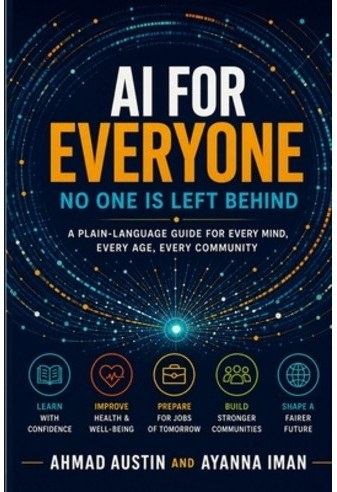
A plain-language guide to AI for every mind, every age, and every community.
- International Labour Organization, Generative AI and Jobs: A Refined Global Index of Occupational Exposure (May 2025)
- World Economic Forum, The Future of Jobs Report 2025
- Brynjolfsson, Li and Raymond, Generative AI at Work (NBER Working Paper 31161)
- Brynjolfsson, Chandar and Chen, Canaries in the Coal Mine? (Stanford, Aug 2025)
Examples are composites written for teaching unless a source is cited. Figures come from the sources listed where given.