
Beginner · lesson 1 of 5 · 8 min
What AI actually does
Separate the real capabilities of today's AI systems from the myths, metaphors, and marketing around them.
- Describe AI in plain language
- Recognize common AI systems around you
- Identify where human judgment still matters
AI finds and applies patterns
Artificial intelligence is a broad name for computer systems that perform tasks we associate with human intelligence: recognizing language, classifying images, making predictions, or generating content. Almost every system in use today learns statistical patterns from data and applies those patterns to a new input. It is closer to very sophisticated pattern completion than to reasoning as people experience it.
Computer systems designed to perform tasks such as prediction, recognition, recommendation, or content generation by applying patterns learned from data.
TikTok’s For You feed does not understand what you enjoy. It notices what you watch to the end, replay, like, share, or scroll past, compares that with the behavior of millions of other viewers, and predicts which video will keep you watching next. When your feed suddenly fills with one topic after you lingered on a single video, nothing read your mind. The pattern simply matched.
Fluent is not the same as thoughtful
An AI tool can produce polished language without holding beliefs, intentions, feelings, or lived experience. A confident tone is a property of the output style, not evidence that the answer is correct. This is the single most expensive misunderstanding in early AI adoption, because fluency is exactly the signal humans normally use to judge competence.
Ask what job the system performs
Recommendation engines, navigation apps, fraud detectors, resume screeners, and chatbots all use AI, but they are doing different jobs. Before trusting any of them, ask three questions: what is it trying to predict, what data shaped it, and what happens to a real person when it is wrong.
Spot the AI around you
Choose three digital tools you used today and identify the prediction or decision each one is making on your behalf.
Use a fictional example or public information. Think it through or write on paper. Do not enter private details into an AI tool.
0 of 4 practice steps checked. Saved on this device.
Tool: a streaming service home screen. Input: everything I have watched, paused, and abandoned, plus what similar viewers watched. Output: a ranked list predicting what will keep me watching. If wrong: I waste an evening. Low consequence, so low scrutiny is reasonable. Now run the same four steps on a tool that screens job applicants and notice how fast the acceptable error rate changes.
Check your understanding
Answer both to mark the lesson complete. You can try again. This is practice, not a graded exam.
1. Which statement best describes most AI systems in use today?
2. An AI assistant gives you a confident, well-written answer with a specific citation. What does the confidence tell you?
Three things to remember
- AI is a collection of technologies, not one all-knowing system.
- Polished output is not proof of understanding.
- The consequence of an error should set how much you verify.
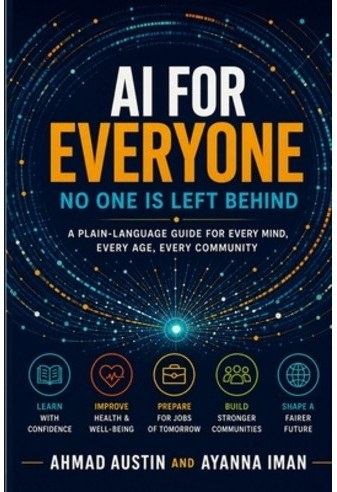
Every idea in this path is expanded with more examples in the book.
Examples are composites written for teaching unless a source is cited. Figures come from the sources listed where given.